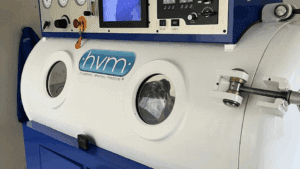
Hyperbaric Oxygen Therapy (HBOT) involves placing a patient in a pressurized chamber where they breathe 100% oxygen—far higher than the 21% found in ambient air. The chamber is pressurized to levels typically between 1.5 to 3 times atmospheric pressure (ATA). Under these conditions, oxygen dissolves more readily into the bloodstream, tissues, and even cerebrospinal and lymphatic fluids.
Key Mechanisms:
- Hyperoxygenation of Tissues:
At high pressure, oxygen is delivered not only by red blood cells but also dissolved directly into plasma. This allows oxygen to reach damaged or low perfusion areas that red blood cellscannot access effectively. - Enhanced Healing & Reduced Inflammation:
HBOT stimulates fibroblast activity, collagen synthesis, and angiogenesis (the formation of new blood vessels). It also reduces inflammation by decreasing pro inflammatory cytokines and edema. - Antibacterial & Immunomodulatory Effects:
Oxygen at high concentrations has bactericidal or bacteriostatic effects on certain anaerobic organisms. It also boosts the ability of white blood cells to kill pathogens. - Reduction in Gas Bubbles:
In cases like decompression sickness or air embolism, HBOT reduces the size of gas bubbles in tissues and accelerates their resorption. - Modulation of Gene Expression:
HBOT influences the expression of genes related to growth factors, antioxidants, and immune response—further supporting repair and regeneration.
Summary:
HBOT works by significantly increasing the amount of oxygen available to tissues, enhancing the body’s natural healing processes, combating infection, reducing inflammation, and supporting recovery in a wide range of medical and veterinary conditions.