Hyperbaric Oxygen Therapy (HBOT)
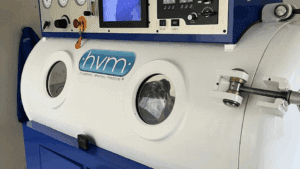
A medical treatment in which an animal breathes 100% oxygen inside a pressurized chamber. The increased pressure allows oxygen to dissolve more readily into blood plasma, promoting healing and fighting infection.
ATA (Atmospheres Absolute)
A unit of pressure used in HBOT. One ATA is the pressure at sea level (14.7 psi). Typical HBOT sessions are conducted at 1.5 to 3.0 ATA.
Barotrauma
Injury caused by a pressure difference between air-filled spaces in the body and the external environment,such as during rapid decompression. Prevented with proper pressurization protocols.
Oxygen Toxicity
A potentially harmful effect of breathing high concentrations of oxygen for prolonged periods, leading to symptoms such as seizures or lung damage. Monitored carefully in HBOT protocols.
Henry’s Law
A gas law that states the amount of gas dissolved in a liquid is proportional to its partial pressure. In HBOT, this explains how oxygen dissolves into the bloodstream at higher pressures.
Hypoxia
A condition in which tissues are deprived of adequate oxygen supply. HBOT is often used to counteract hypoxia.
Ischemia
A restriction in blood supply to tissues, causing a shortage of oxygen. HBOT helps by enhancing oxygen delivery to ischemic tissues.
Angiogenesis
The formation of new blood vessels. HBOT stimulates angiogenesis in damaged or poorly vascularized Glossary of Key HBOT Terms in Veterinary Medicine tissues, improving healing.
Neovascularization
A type of angiogenesis specifically referring to new capillary growth, often beneficial in wound repair and recovery post-injury.
Reactive Oxygen Species (ROS)
Byproducts of oxygen metabolism that can have damaging effects but also play a role in cell signaling and immune response. HBOT increases ROS temporarily to aid in tissue repair.
Fibroblast Proliferation
The growth of fibroblast cells, which are essential for wound healing. HBOT accelerates fibroblast activity to promote tissue regeneration.
Vasoconstriction
The narrowing of blood vessels. Under HBOT, this effect can reduce edema (swelling) while still delivering high oxygen levels via plasma.
Edema
Swelling caused by fluid accumulation in tissues. HBOT reduces edema through vasoconstriction and improved oxygenation.
Biofilm
A structured community of bacteria that are difficult to treat with antibiotics. HBOT enhances antibiotic effectiveness and immune response against biofilms.
Osteomyelitis
A serious bone infection often treated with HBOT due to its ability to oxygenate bone tissue and support healing.
Delayed Wound Healing
A condition where wounds fail to heal in a timely manner. HBOT can improve oxygen delivery and immune activity in these cases.
Adjunctive Therapy
A secondary treatment used together with a primary therapy. HBOT is commonly used as an adjunct to surgery, antibiotics, or wound care.
Decompression
The gradual return to normal pressure at the end of an HBOT session to prevent barotrauma or decompression sickness.
Seizure Threshold
The level at which stimuli may provoke a seizure. HBOT may temporarily lower this threshold; animals are monitored accordingly.
Chamber Cycle
A single session of HBOT, consisting of compression (pressurization), treatment time at depth, and decompression.